Turning Enterprise Data into Decisions.
How Solance Industries is using Wisebric to connect distributed business information and give leadership direct access to critical insights.
For a manufacturer operating across production facilities, business entities, and distribution networks, valuable information exists throughout the organization. The challenge is making that information accessible to the people who need it, when they need it.
Solance Industries partnered with Wisebric to introduce an AI-powered intelligence layer that connects business information and allows senior leadership to explore it through natural-language conversations.
Battery Manufacturing
A Connected Business. Information Across Multiple Systems.
Manufacturing businesses operate through interconnected processes. Production, procurement, finance, distribution, and customer operations all contribute to the larger business picture.
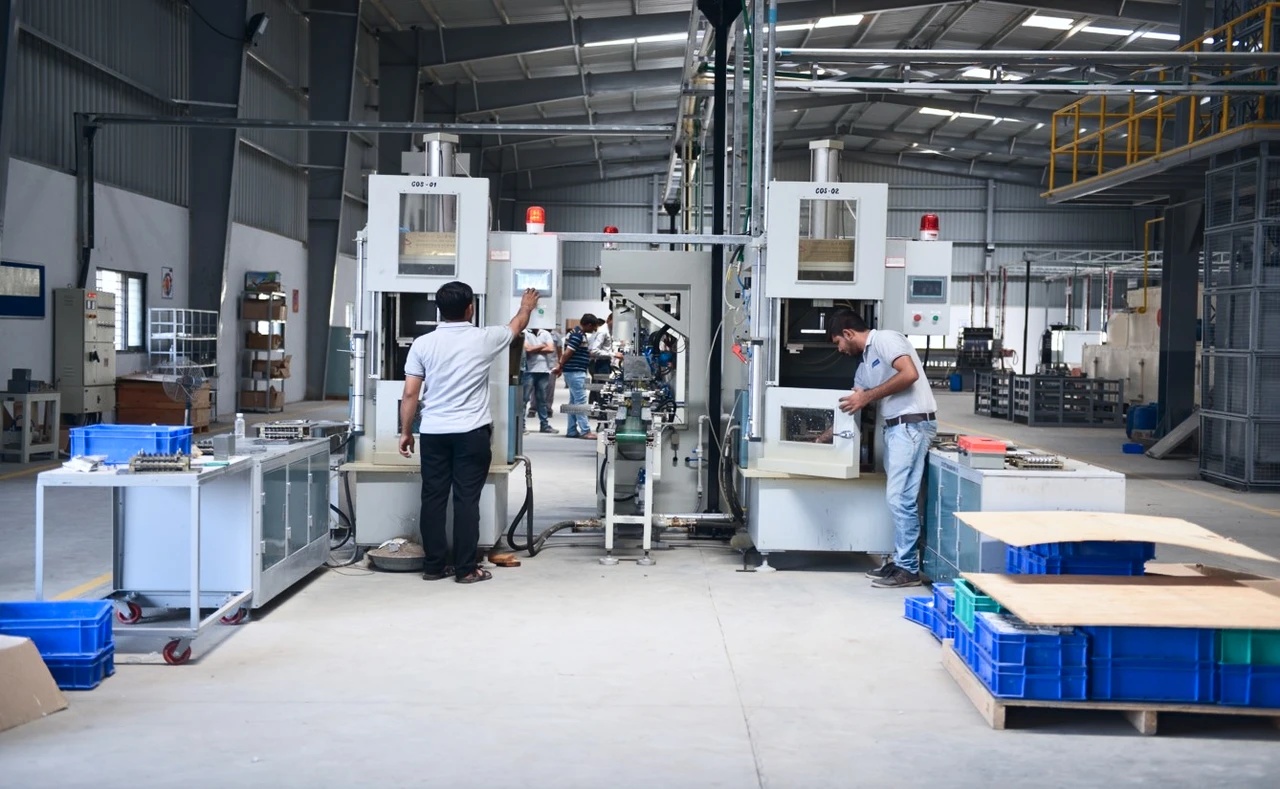
For Solance Industries, these activities extend across manufacturing operations and an established distribution ecosystem. The company manufactures batteries for automotive, two-wheeler, inverter, UPS, and other energy applications, with operations spanning multiple markets.
As the business expanded, its organizational structure created an increasingly distributed information environment. Individual depots and business entities maintained their own financial records and accounting environments. While these systems supported day-to-day operations, business information was spread across multiple sources.
For senior leadership, understanding the business often required gathering information from different teams.
Three Realities of a Distributed Enterprise
- 01 /Multiple Business Entities
Different depots and business units maintained their own financial information, creating multiple sources of business data.
- 02 /Information Spread Across Systems
Relevant financial and transactional records existed within different accounting environments rather than one conversational interface.
- 03 /Leadership Depended on Departmental Responses
When directors needed specific answers, they often relied on finance or accounting teams to retrieve the relevant information.
The Real Challenge
The issue was not that Solance lacked accounting software or business reports. The issue was that accessing a specific answer could still require several steps, multiple people, and additional time.
The information existed. Getting to it was the challenge.
When Information Exists, Why Should Answers Take Time?
Consider a common leadership question:
What was the last purchase price of this raw material?
The information may already exist in the organization's accounting records. But obtaining the answer can involve contacting the accounts department, locating the relevant transaction, verifying the information, and communicating the result.
This process works, but it creates a dependency between the decision-maker and the person retrieving the information. For a busy leadership team, these small delays can become a recurring operational inconvenience.
Solance already had financial systems and reporting capabilities. What it needed was a more direct way for leadership to interact with the underlying business information.
The Opportunity
Imagine if a director could ask:
- What was the last purchase price of a particular material?
- How have purchase values changed over a selected period?
- What are the financial figures for a particular business entity?
- Which transactions relate to a specific supplier?
- What does the available data tell us about a particular business question?
Instead of navigating different systems or waiting for someone to prepare an answer, leadership could begin with a simple question.
This became the starting point for Solance's Wisebric journey.
Building an Intelligence Layer Across Business Systems.
Wisebric was introduced to connect Solance's distributed accounting information with a conversational AI experience for senior management.
The implementation brought together financial data from multiple Tally environments into a structured data foundation accessible through the Wisebric platform. Rather than replacing the existing accounting systems, Wisebric was designed to work with the information already maintained within them.
- SourceMultiple Tally EnvironmentsSeparate accounting environments across entities
- IntegrationXML Data IntegrationAccounting data processed from XML
- FoundationStructured SQL Data LayerA common information layer
- PlatformWisebric Enterprise AI PlatformConversational intelligence
- AssistantLeadership Finance AssistantFor authorized management users
- OutcomeNatural-Language Business AnswersRelevant financial and transactional information
How the Solution Works
- STEP 01
Connect Existing Business Systems
Financial and transactional information is sourced from Solance's separate Tally environments.
- STEP 02
Structure the Information
The integration processes XML-based accounting data into a SQL-based data environment.
- STEP 03
Establish a Connected Information Foundation
The structured data provides a common information layer for supported business queries.
- STEP 04
Enable Conversational Intelligence
Wisebric's Finance Assistant allows authorized management users to ask natural-language questions about the connected information.
- STEP 05
Deliver Business Answers
Leadership can retrieve relevant financial and transactional information through a conversational interface.
Not Another Dashboard.
The objective was not to build another conventional dashboard. It was to make existing business information easier to access.
With Wisebric, the experience shifts from searching through systems and reports to asking a business question directly.
Live and in Use by Management.
The Wisebric Finance Assistant has been deployed within Solance's environment and is being used by its management team.
The implementation demonstrates how existing enterprise data can become more accessible without requiring the organization to abandon its established accounting workflows.
The Question That Changed the Conversation.
During an early demonstration of the Finance Assistant, Wisebric showcased how Solance's management could interact with business information through AI. The initial response was encouraging. Management could see the potential of conversational access to financial information.
However, one senior decision-maker raised a practical concern. The organization already had analytics and reporting systems. What additional value would another technology experience provide?
Then something happened that made the answer clear.
A Real Business Question
During the discussion, a purchasing-related inquiry came up. The team needed to know the historical purchase price of a raw material. The question was directed to the accounting department.
The accounting team was occupied and indicated that it would take approximately 15 to 20 minutes to provide the information. At that moment, the Wisebric team suggested asking the same question through the Finance Assistant.
The question was entered into Wisebric. The system returned the relevant answer directly.
- 1Ask the accounting team.
- 2Wait for availability.
- 3Retrieve the relevant record.
- 4Communicate the answer.
- 1Ask the question.
- 2Access connected information.
- 3Receive the relevant response.
A practical example of how conversational AI can reduce dependency on manual information requests.
A Different Way to Experience Business Information
This was not a carefully staged question designed to showcase a technical feature. It was a real business requirement that emerged during a management discussion.
The experience demonstrated the difference between having information stored in a system and being able to access it when needed.
The value of Wisebric became immediately tangible.
From Reporting Dependency to Leadership Intelligence.
The value of the implementation goes beyond answering an individual purchasing question. Wisebric provides Solance's management with a new way to interact with business information.
Instead of treating financial data as something that must always be retrieved through reports or departmental requests, leadership can engage with connected information through a conversational experience.
- More Direct Access to Business Information
Management can ask supported questions about connected financial and transactional records without initiating a separate manual request each time.
- Reduced Dependence on Routine Information Retrieval
The Finance Assistant provides another way to obtain answers that would otherwise require assistance from accounting or finance personnel.
- Better Accessibility Across Distributed Information
Data originating from separate accounting environments can be made accessible through a connected information layer.
- A More Natural Experience for Leadership
Decision-makers can express information needs as business questions rather than navigating accounting interfaces or report structures.
- A Foundation for Broader AI Adoption
A working Finance Assistant gives Solance practical experience with enterprise AI and establishes a foundation for exploring additional applications.
What Has Been Achieved
- A deployed Wisebric Finance Assistant.
- Integration of financial information from multiple Tally environments.
- A structured SQL-based data foundation.
- Conversational access for management.
- Demonstrated value through real business questions.
- Continued use of the solution within Solance's environment.
Business Value. The immediate benefit is simpler, more direct access to information that already exists within the business. As usage expands, the same approach can support broader operational intelligence across departments.
From Leadership Intelligence to Connected Enterprise Operations.
The Finance Assistant represents the beginning of a broader opportunity. Once business leaders experience how AI can make existing information more accessible, new possibilities become easier to identify.
For Solance, those opportunities extend beyond finance. The company is exploring how Wisebric can support additional functions across its manufacturing and distribution ecosystem.
- Phase 01Implemented and in use
Leadership & Financial Intelligence
Connect financial information from distributed accounting environments and enable conversational access for senior management.
- Phase 02Next area of exploration
Manufacturing Operations Intelligence
Manufacturing environments generate information through operational systems, spreadsheets, production records, and manual processes. Wisebric can be evaluated for connecting relevant operational information and helping teams retrieve answers more efficiently.
Potential applications include production information access, operational reporting assistance, and manufacturing knowledge retrieval.
- Phase 03Future expansion opportunity
Quality & Customer Support Intelligence
Quality and customer support functions generate valuable information about products, issues, service interactions, and operational performance.
Potential AI applications include faster access to quality records, support knowledge, and relevant customer information.
- Phase 04Future expansion opportunity
Distribution Intelligence
Solance's distribution ecosystem creates opportunities for more connected visibility across depots, inventory-related information, and regional business operations.
The precise scope of these applications will depend on future business requirements, integrations, and implementation decisions.
Not AI Everywhere at Once.
The goal is not to introduce AI everywhere at once. It is to build on a successful implementation and expand into additional areas where accessible information can make a practical difference.
Start with real business value. Build confidence. Expand intelligently.
Enterprise AI Becomes Valuable When It Answers Real Business Questions.
Enterprise AI adoption does not always begin with a large transformation program. Sometimes it begins with a familiar question.
For Solance Industries, Wisebric introduced a different experience. By connecting existing business information to a conversational AI assistant, the company gave leadership a more direct way to access answers.
The implementation illustrates a practical principle for enterprise AI adoption:
The greatest opportunity is not always creating more information. Sometimes it is making existing information easier to use.
For manufacturing organizations with distributed systems, multiple business entities, and information-intensive operations, that shift can create meaningful opportunities. Solance's journey shows how one implemented use case can establish the foundation for a broader enterprise AI vision.
 Your Enterprise AI Journey
What If Your Business Information Could Answer Back?
Your organization already generates valuable information across its systems, departments, and operations. Wisebric helps turn that information into accessible enterprise intelligence.